This tool converts a time period into a frequency, or a frequency into a time period. Enter a value, pick its units, and the calculator works out the other.
Frequency and time period
Frequency and time period are two ways of measuring the same thing: how often a repeating signal comes round. Any waveform that repeats, a sine wave, a square wave or a clock pulse has both.
The frequency (f) is the number of complete cycles the signal goes through in one second, measured in hertz (Hz). A waveform that repeats 1,000 times a second has a frequency of 1,000 Hz, or 1 kHz.
The time period (T) is how long one complete cycle takes, measured in seconds (s). A signal with a time period of 0.001 seconds fits 1,000 cycles into a second, so its frequency is 1,000 Hz.
How the two relate
Frequency and time period are inversely related: as one goes up, the other comes down. The relationship is:
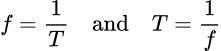
So if you know one, you can always work out the other.
Working out the frequency
If you know the time period, divide 1 by it:

For example, a clock signal with a time period of 20 µs has a frequency of:
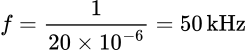
Working out the time period
If you know the frequency, divide 1 by that instead:

For example, an oscillator running at 2 MHz has a time period of:
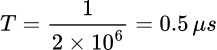
A few things worth remembering
- Signal Timing. The time period tells you how long a pulse lasts, which matters when you are setting pulse widths for a microcontroller or FPGA.
- Filter Design. The frequencies you are working with set the cut-off points for low-pass, high-pass and band-pass filters.
- Clock Speed. In digital circuits the frequency is the clock speed, and that sets how fast a processor or communication link runs.
- Watch your units. Frequency runs from hertz (Hz) up through kilohertz (kHz), megahertz (MHz), gigahertz (GHz) and terahertz (THz); time runs from seconds (s) down through milliseconds (ms), microseconds (µs), nanoseconds (ns) and picoseconds (ps). Mixing them up is the easiest way to end up a thousand or a million out.
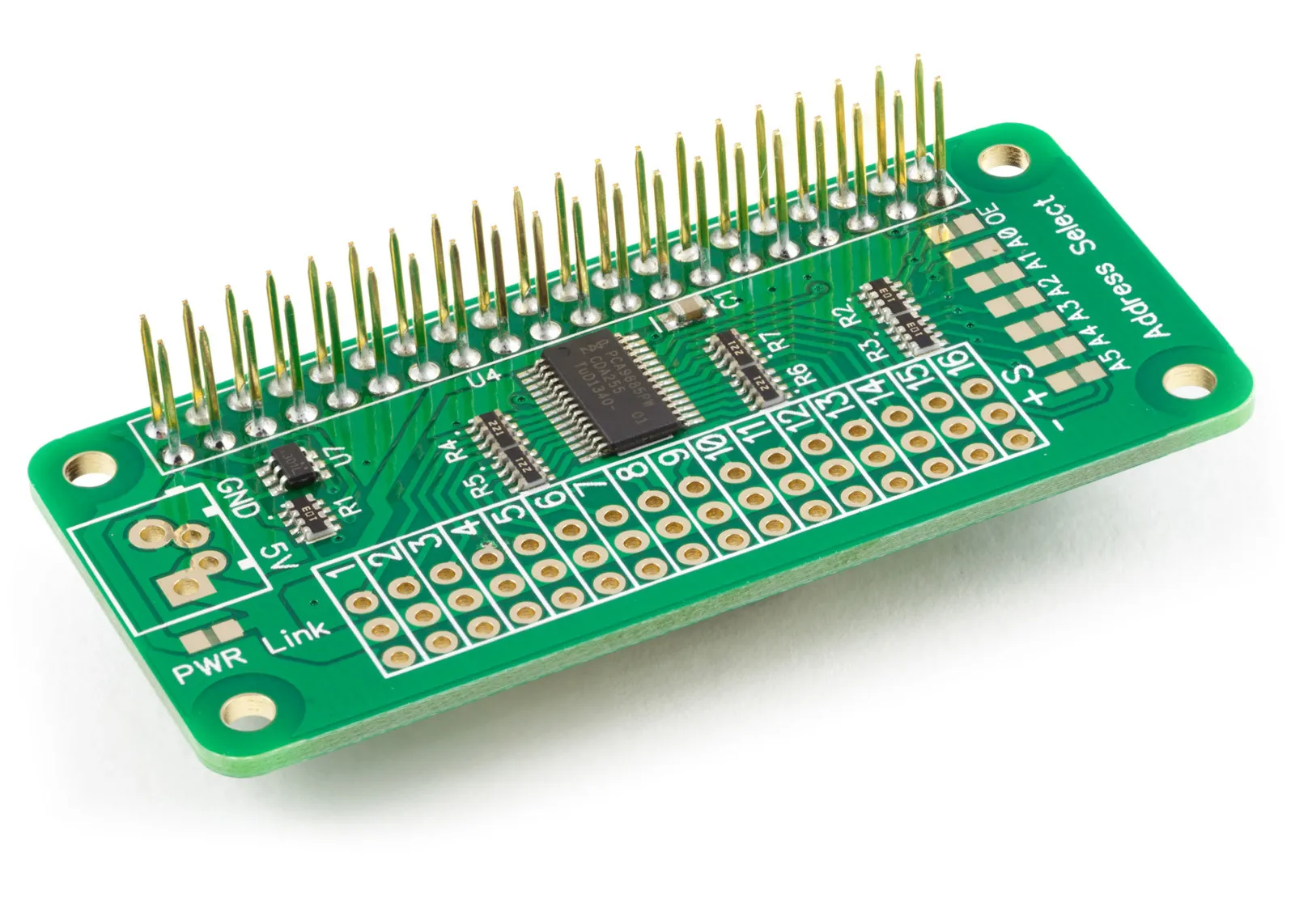
Servo PWM Pi
16 Channel 12-bit PWM and Servo Driver with I2C interface using PCA9685 for driving LEDs and RC servos