The AB Electronics UK Knowledge Base provides support solutions, tutorials and troubleshooting guides.

YOU WILL NEED THIS BOARD
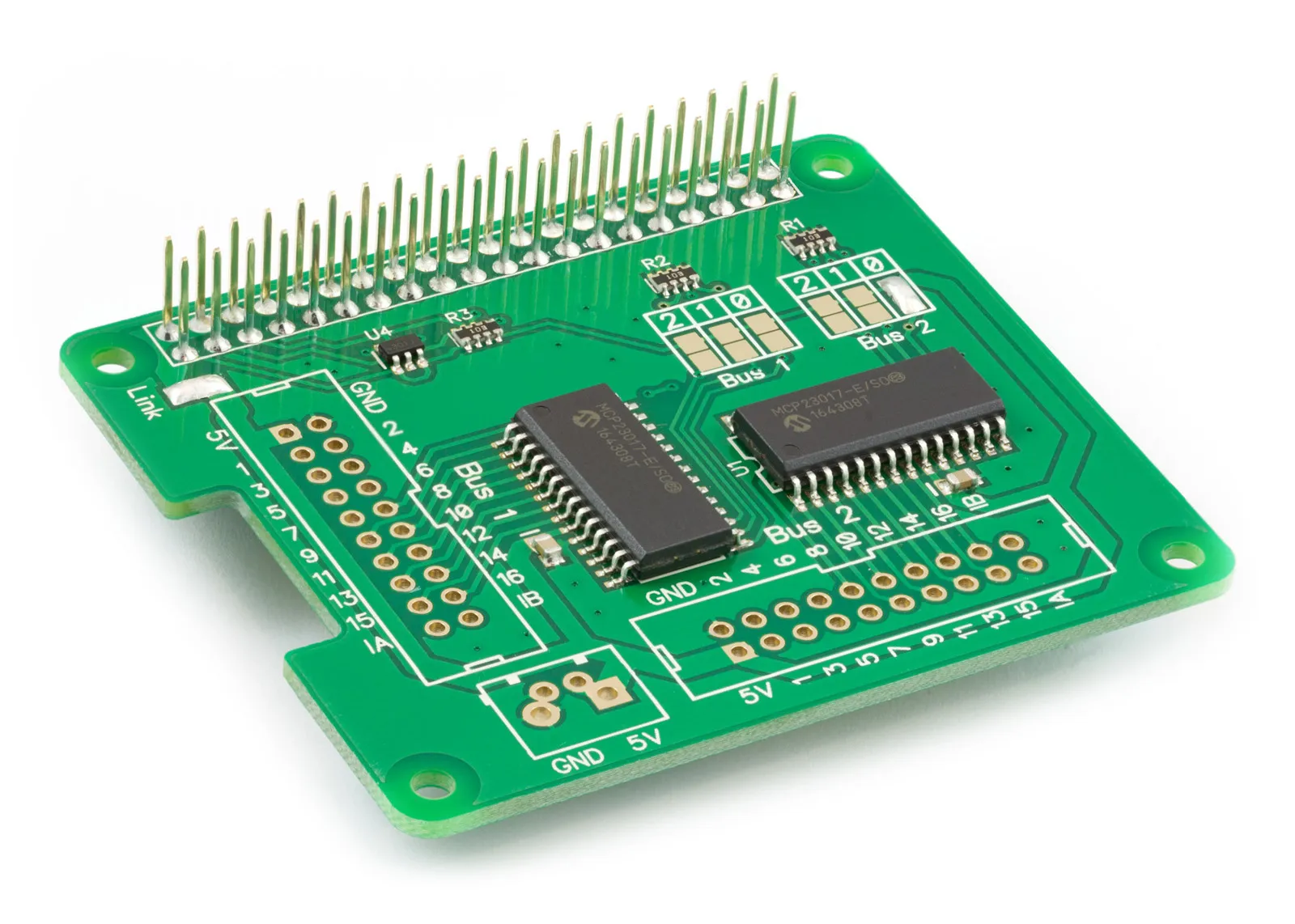
C++ Library to use with IO Pi Raspberry Pi development board.
The example demo files can be found in /ABElectronics_CPP_Libraries/IOPi/demos
Note: Microchip recommends that pin 8 (GPA7) and pin 16 (GPB7) are used as outputs only. This change was made for revision D MCP23017 chips manufactured after June 2020. See the MCP23017 datasheet for more information.
Downloading and Installing the library
To download to your Raspberry Pi type in terminal:
git clone https://github.com/abelectronicsuk/ABElectronics_CPP_Libraries.git
Classes:
IOPi(address, initialise)
Parameters:
address: i2c address for the target device. 0x20 to 0x27
initialise (optional): true = direction set as inputs, pull-ups disabled, ports not inverted. false = device state unaltered. defaults to true
Methods:
set_pin_direction(uint8_t pin, uint8_t direction):
Sets the IO direction for an individual pin
Parameters:
pin: 1 to 16
direction: 1 = input, 0 = output
Returns: null
get_pin_direction(uint8_t pin)
Get the IO direction for an individual pin
Parameters:
pin: pin to read, 1 to 16
Returns: (uint8_t) 1 = input, 0 = output
set_port_direction(uint8_t port, uint8_t direction):
Sets the IO direction for the specified IO port
Parameters:
port: 0 = pins 1 to 8, 1 = pins 9 to 16
direction: number between 0 and 255 or 0x00 and 0xFF. Each bit in the 8-bit number represents a pin on the port. 1 = input, 0 = output
Returns: null
get_port_direction(uint8_t port):
Get the direction from an IO port
Parameters:
port: 0 = pins 1 to 8, 1 = pins 9 to 16
Returns: (uint8_t) number between 0 and 255 (0xFF)
set_bus_direction(uint16_t direction):
Sets the IO direction for all pins on the bus
Parameters:
direction: 16-bit number 0 to 65535 (0xFFFF). For each bit 1 = input, 0 = output
Returns: null
get_bus_direction()
Get the direction for an IO bus
Returns: (uint16_t) 16-bit number 0 to 65535 (0xFFFF). For each bit 1 = input, 0 = output
set_pin_pullup(uint8_t pin, uint8_t value)
Set the internal 100K pull-up resistors for an individual pin
Parameters:
pin: pin to update, 1 to 16 value: 1 = enabled, 0 = disabled
Returns: null
get_pin_pullup(uint8_t pin)
Get the internal 100K pull-up resistors for an individual pin
Parameters:
pin: pin to read, 1 to 16
Returns: (uint8_t) 1 = enabled, 0 = disabled
set_port_pullups(uint8_t port, uint8_t value)
Set the internal 100K pull-up resistors for the selected IO port
Parameters:
port: 0 = pins 1 to 8, 1 = pins 9 to 16
value: number between 0 and 255 or 0x00 and 0xFF. Each bit in the 8-bit number represents a pin on the port. 1 = Enabled, 0 = Disabled
Returns: null
get_port_pullups(uint8_t port):
Get the internal pull-up status for the selected IO port
Parameters:
port: 0 = pins 1 to 8, 1 = pins 9 to 16
Returns: (uint8_t) number between 0 and 255 (0xFF)
set_bus_pullups(uint16_t value)
Set internal 100K pull-up resistors for an IO bus
Parameters:
value: 16-bit number 0 to 65535 (0xFFFF). For each bit 1 = enabled, 0 = disabled
Returns: null
get_bus_pullups()
Get the internal 100K pull-up resistors for an IO bus
Returns: (uint16_t) 16-bit number 0 to 65535 (0xFFFF). For each bit 1 = enabled, 0 = disabled
write_pin(uint8_t pin, uint8_t value)
Write to an individual pin 1 - 16
Parameters:
pin: 1 to 16
value: 1 = logic high, 0 = logic low
Returns: null
write_port(uint8_t port, uint8_t value)
Write to all pins on the selected port
Parameters:
port: 0 = pins 1 to 8, 1 = pins 9 to 16
value: number between 0 and 255 or 0x00 and 0xFF. Each bit in the 8-bit number represents a pin on the port. 1 = logic high, 0 = logic low
Returns: null
write_bus(uint16_t value)
Write to all pins on the selected bus
Parameters:
value: 16-bit number 0 to 65535 (0xFFFF). For each bit 1 = logic high, 0 = logic low
Returns: null
read_pin(uint8_t pin)
Read the value of an individual pin 1 - 16
Parameters:
pin: 1 to 16
Returns: (uint8_t) 0 = logic low, 1 = logic high
read_port(uint8_t port)
Read all pins on the selected port
Parameters:
port: 0 = pins 1 to 8, 1 = pins 9 to 16
Returns: (uint8_t) number between 0 and 255 or 0x00 and 0xFF. Each bit in the 8-bit number represents a pin on the port. 0 = logic low, 1 = logic high
read_bus()
Read all pins on the bus
Returns: (uint16_t) 16-bit number 0 to 65535 (0xFFFF) Each bit in the 16-bit number represents a pin on the port. 0 = logic low, 1 = logic high
invert_pin(uint8_t pin, uint8_t polarity)
Invert the polarity of the selected pin
Parameters:
pin: 1 to 16
polarity: 0 = same logic state of the input pin, 1 = inverted logic state of the input pin
Returns: null
get_pin_polarity(uint8_t pin)
Get the polarity of the selected pin
Parameters:
pin: pin to read, 1 to 16
Returns: (uint8_t) 0 = same logic state of the input pin, 1 = inverted logic state of the input pin
invert_port(uint8_t port, uint8_t polarity)
Invert the polarity of the pins on a selected port
Parameters:
port: 0 = pins 1 to 8, 1 = pins 9 to 16
polarity: number between 0 and 255 or 0x00 and 0xFF. Each bit in the 8-bit number represents a pin on the port. 0 = same logic state of the input pin, 1 = inverted logic state of the input pin
Returns: null
get_port_polarity(uint8_t port):
Get the polarity for the selected IO port
Parameters:
port: 0 = pins 1 to 8, 1 = pins 9 to 16
Returns: (uint8_t) number between 0 and 255 (0xFF)
invert_bus(uint16_t polarity)
Invert the polarity of the pins on the bus
Parameters:
polarity: 16-bit number 0 to 65535 (0xFFFF). For each bit 0 = same logic state of the input pin, 1 = inverted logic state of the input pin
Returns: null
get_bus_polarity()
Get the polarity of the pins on the bus
Returns: (uint16_t) 16-bit number 0 to 65535 (0xFFFF). For each bit 0 = same logic state of the input pin, 1 = inverted logic state of the input pin
mirror_interrupts(uint8_t value)
Sets whether the interrupt pins INT A and INT B are independently connected to each port or internally connected together
Parameters:
value: 1 = The INT pins are internally connected, 0 = The INT pins are not connected. INT A is associated with PortA and INT B is associated with PortB
Returns: null
set_interrupt_polarity(uint8_t value)
Sets the polarity of the INT output pins
Parameters:
value: 0 = Active Low, 1 = Active High
Returns: null
get_interrupt_polarity()
Get the polarity of the INT output pins
Returns: (uint8_t) 1 = Active-high. 0 = Active-low.
set_interrupt_type(uint8_t port, uint8_t value)
Sets the type of interrupt for each pin on the selected port
Parameters:
port: 0 = pins 1 to 8, 1 = pins 9 to 16
value: number between 0 and 255 or 0x00 and 0xFF. Each bit in the 8-bit number represents a pin on the port. 1 = interrupt is fired when the pin matches the default value, 0 = the interrupt is fired on state change
Returns: null
get_interrupt_type(uint8_t port):
Get the type of interrupt for each pin on the selected port
Parameters:
port: 0 = pins 1 to 8, 1 = pins 9 to 16
Returns: (uint8_t) number between 0 and 255 (0xFF)
For each bit 1 = interrupt is fired when the pin matches the default value, 0 = interrupt fires on state change
set_interrupt_defaults(uint8_t port, uint8_t value)
These bits set the compare value for pins configured for interrupt-on-change on the selected port.
If the associated pin level is the opposite from the register bit, an interrupt occurs.
Parameters:
port: 0 = pins 1 to 8, 1 = pins 9 to 16, value: compare value between 0 and 255 or 0x00 and 0xFF. Each bit in the 8-bit number represents a pin on the port.
Returns: null
get_interrupt_defaults(uint8_t port):
Get the interrupt default value for each pin on the selected port
Parameters:
port: 0 = pins 1 to 8, 1 = pins 9 to 16
Returns: (uint8_t) number between 0 and 255 (0xFF)
set_interrupt_on_pin(uint8_t pin, uint8_t value)
Enable interrupts for the selected pin
Parameters:
pin: 1 to 16
value: 0 = interrupt disabled, 1 = interrupt enabled
Returns: null
get_interrupt_on_pin(uint8_t pin)
Gets whether the interrupt is enabled for the selected pin
Parameters:
pin: pin to read, 1 to 16
Returns: (uint8_t) 1 = enabled, 0 = disabled
set_interrupt_on_port(uint8_t port, uint8_t value)
Enable interrupts for the pins on the selected port
Parameters:
port: 0 = pins 1 to 8, 1 = pins 9 to 16
value: number between 0 and 255 or 0x00 and 0xFF. Each bit in the 8-bit number represents a pin on the port.
Returns: null
get_interrupt_on_port(uint8_t port):
Gets whether the interrupts are enabled for the selected port
Parameters:
port: 0 = pins 1 to 8, 1 = pins 9 to 16
Returns: (uint8_t) number between 0 and 255 (0xFF). For each bit 1 = enabled, 0 = disabled
set_interrupt_on_bus(uint16_t value)
Enable interrupts for the pins on the bus
Parameters:
value: 16-bit number 0 to 65535 (0xFFFF). For each bit 1 = enabled, 0 = disabled
Returns: null
get_interrupt_on_bus()
Gets whether the interrupts are enabled for the bus
Returns: (uint16_t) 16-bit number 0 to 65535 (0xFFFF). For each bit 1 = enabled, 0 = disabled
read_interrupt_status(uint8_t port)
Read the interrupt status for the pins on the selected port
Parameters:
port: 0 = pins 1 to 8, 1 = pins 9 to 16
Returns: (uint8_t) number between 0 and 255 or 0x00 and 0xFF. Each bit in the 8-bit number represents a pin on the port. 1 = Enabled, 0 = Disabled
read_interrupt_capture(uint8_t port)
Read the value from the selected port at the time of the last interrupt trigger
Parameters:
port: 0 = pins 1 to 8, 1 = pins 9 to 16
Returns: (uint8_t) number between 0 and 255 or 0x00 and 0xFF. Each bit in the 8-bit number represents a pin on the port. 1 = Enabled, 0 = Disabled
reset_interrupts()
Set the interrupts A and B to 0
Parameters: null
Returns: null
Note: documents in Portable Document Format (PDF) require Adobe Acrobat Reader 5.0 or higher to view, download Adobe Acrobat Reader or other PDF reading software for your computer or mobile device.
Also useful for your Raspberry Pi project
Temperature & Sensing
1 Wire Pi Plus
Connect dozens of 1-Wire sensors - temperature, iButtons, EEPROMs - via a single GPIO pin. Stacks directly on the 40-pin header.
Analogue I/O
ADC Pi
Read up to 8 analogue inputs - perfect for pairing with your temperature sensors or other analogue-output devices.
All-in-one
Expander Pi
Combines ADC, DAC, 32 GPIO ports and a real-time clock on one board. The most versatile board for complex Raspberry Pi projects.
